#relationships·Jul 17, 2026·6 min read
Frequency vs Impression: Which Count Matters More for Campaign Reach?
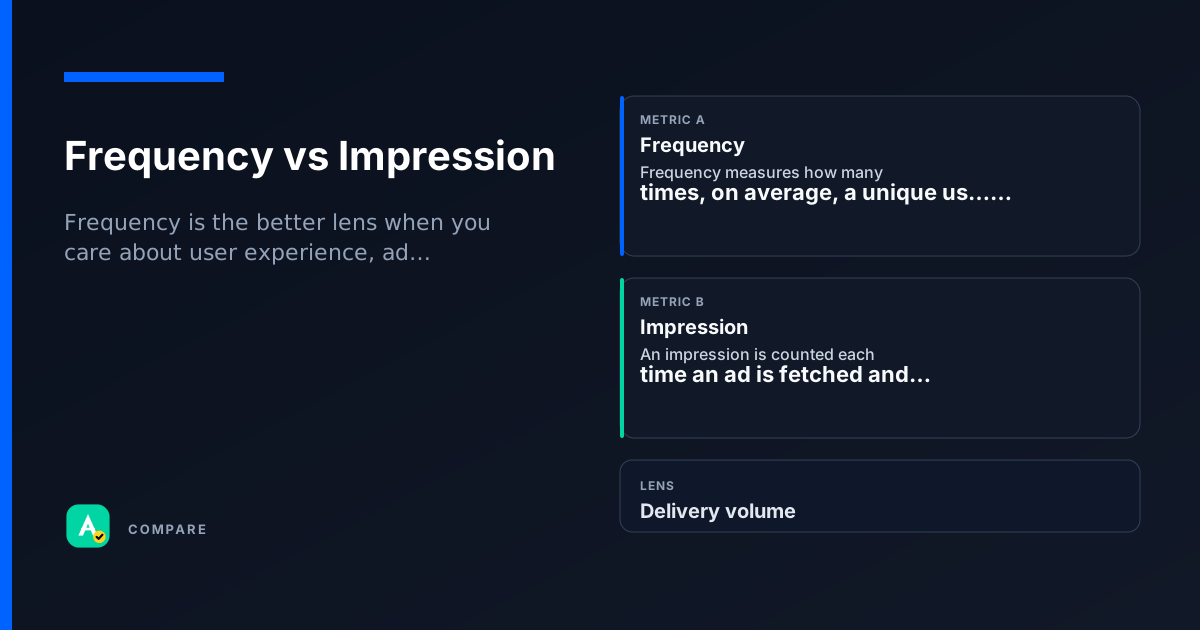
Frequency measures how many times a single user sees your ad, while Impression counts every ad load regardless of user. The decision question: are you trying to control repetition or just tally total views?
Core Difference: Repetition vs Raw Volume
Impression = every time an ad is fetched and counted (MRC standard: at least 50% of pixels in view for 1 second for display). Frequency = average number of times a unique user saw your ad over a period.
- Impression is a volume metric: total opportunities to see.
- Frequency is a ratio metric: impressions / unique reach.
- Formula: Frequency = Impressions / Unique Reach.
So one impression could be the 1st or the 10th exposure for a user — frequency tells you which.
Which to Use When
Choose Impression when:
- You need to measure total delivery volume (e.g., for CPM billing).
- You're optimizing for raw awareness (e.g., TV-style reach).
- You're comparing cost efficiency across publishers.
Choose Frequency when:
- You want to avoid ad fatigue or over-exposure.
- You're running a retargeting campaign and need to cap repetition.
- You're measuring effective reach (e.g., 3+ exposures).
Use both together when:
- You're planning a frequency cap strategy: set a max frequency per user, then track impressions to see if you hit it.
- You're analyzing campaign saturation: rising frequency with flat conversions signals fatigue.
How they diverge
What They Count
- Impression: counts each ad load event, even if the same user sees it 10 times.
- Frequency: counts the average number of times a unique user was exposed.
Unit of Analysis
- Impression: event-level (each ad request).
- Frequency: user-level (per unique user).
Impact on Optimization
- Impression: optimizing for more impressions can increase frequency without you noticing.
- Frequency: optimizing for low frequency may reduce total impressions (reach vs repetition trade-off).
Where they overlap
Both Are Denominator Metrics
Impressions are the denominator for CPM, CTR, and viewability rate. Frequency is the denominator for effective reach calculations.
Both Are Reported by Ad Servers
Google Ad Manager, Meta Ads Manager, and Amazon DSP all report both metrics in standard dashboards.
Real scenarios
Retargeting Campaign Fatigue
Setup: A retailer runs a retargeting campaign with no frequency cap.
- What happened: Impressions grew 300% week-over-week, but conversions dropped 40%.
- What they checked: Frequency had climbed to 12 per user — users were annoyed and stopped clicking.
Takeaway: Impressions alone hid the problem. Frequency revealed over-exposure.
Brand Awareness Reach Goal
Setup: A CPG brand wants to reach 1M unique users in a market.
- What happened: They bought 5M impressions but only reached 500K users (frequency = 10).
- What they checked: They had optimized for low CPM (impression cost) but not for reach.
Takeaway: Impressions don't equal reach. Frequency shows the gap.
How they work together
Frequency is the better lens when you care about user experience, ad fatigue, or retargeting caps. Example: a retargeting campaign should cap frequency at 3 per week to avoid annoyance.
Impression is the better lens when you need to track delivery volume for billing or reach estimation. Example: a brand awareness campaign measures success by total impressions served.
Use both when you need to balance reach and repetition — e.g., plan a frequency cap of 5 and then monitor impressions to see if you're under-delivering.
Side-by-side snapshot
| Lens | Frequency | Impression |
|---|---|---|
| Definition | Average number of times a unique user saw the ad | Each time an ad is fetched and counted |
| Unit | User-level (per unique user) | Event-level (per ad request) |
| Formula | Impressions / Unique Reach | Count of ad loads (no formula needed) |
| Typical Use | Frequency capping, ad fatigue analysis, effective reach planning | Billing (CPM), delivery volume, viewability rate denominator |
| Can Be Misleading When | Low frequency may hide under-delivery to key segments | High impression count may mask low unique reach |
Common pitfalls
Confusing Impression Volume with Reach
Why the confusion is wrong: Many beginners think "more impressions = more people reached." But a single user can generate 100 impressions.
- What to do instead: Always pair impressions with unique reach and frequency. Use the formula: Reach = Impressions / Frequency.
Ignoring Frequency When Optimizing for Impressions
Why the confusion is wrong: Optimizing for impressions alone can drive frequency up without you noticing, leading to ad fatigue and wasted spend.
- What to do instead: Set a frequency cap in your ad server (e.g., max 3 per user per day) before scaling impressions.
Quick check
Test whether you can tell these metrics apart.
single
Which metric counts each ad load event, even if the same user sees it 10 times?
Select an answer to continue
For learning only. Not advice on bids or spend.
You may also like
Metrics
Frequency (Average Frequency)
Frequency measures how many times, on average, a unique user saw your ad during a campaign peri…
DeliveryMetrics
Impression
An impression is counted each time an ad is fetched and displayed to a user, per the platform’s…
DeliveryRelationships
Fill Rate vs Match Rate
RelationshipsRelationships
CPM vs CTR
Relationships