#relationships·Jul 17, 2026·6 min read
eCPM vs Take Rate: Which Ad Metric Matters for Learner Engagement?
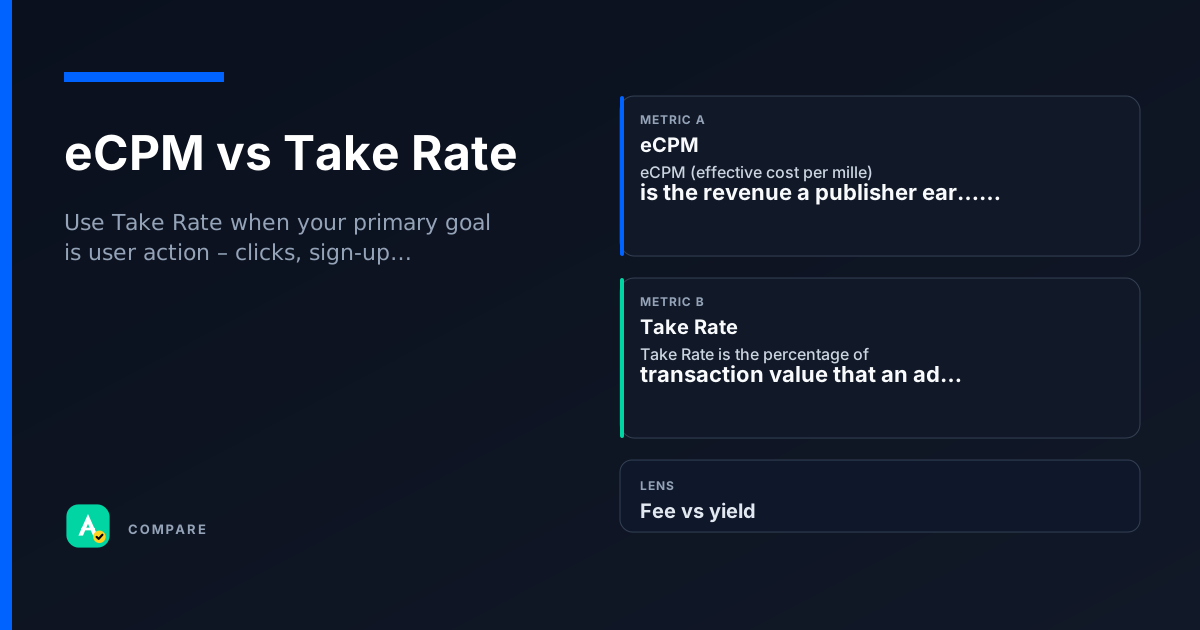
eCPM (effective Cost Per Mille) measures revenue per 1,000 ad impressions, while Take Rate is the percentage of users who click or convert after seeing an ad. eCPM focuses on monetization efficiency; Take Rate reveals audience responsiveness.
Core Difference: Revenue Efficiency vs User Action
eCPM = (Total Revenue / Total Impressions) × 1,000. It tells you how much money you earn from every thousand ad views.
Take Rate = (Clicks or Conversions / Impressions) × 100. It tells you the proportion of users who take a desired action.
- eCPM is a monetization metric – higher is better for publisher revenue.
- Take Rate is an engagement metric – higher means the ad creative or offer resonates.
Example
- 10,000 impressions, $50 revenue → eCPM = $5.00
- 10,000 impressions, 200 clicks → Take Rate = 2%
Which to Use When
Pick eCPM when:
- You are a publisher optimizing ad inventory revenue.
- Comparing monetization across different ad networks or formats.
- Running programmatic auctions where fill rate and CPM matter.
Pick Take Rate when:
- You are an advertiser or campaign manager focused on user response.
- Testing creative variations or audience targeting.
- Evaluating conversion funnel efficiency (e.g., click-through or sign-up rate).
Use both together when:
- You need a holistic view: high eCPM with low Take Rate may indicate high-paying but irrelevant ads.
- Balancing revenue goals with user experience (e.g., in educational platforms).
How they diverge
Focus
eCPM = revenue per 1,000 impressions (monetization). Take Rate = user action percentage (engagement).
- eCPM is publisher-centric; Take Rate is advertiser-centric.
Calculation
eCPM = (Revenue / Impressions) × 1,000. Take Rate = (Actions / Impressions) × 100.
- eCPM uses monetary input; Take Rate uses count of actions.
Optimization Goal
eCPM → maximize revenue per impression. Take Rate → maximize user response per impression.
- High eCPM can coexist with low Take Rate (e.g., expensive, irrelevant ads).
Where they overlap
Both Use Impressions as Denominator
Both metrics start with the same base: total ad impressions served. This makes them comparable across campaigns when segmented properly.
Both Are Standardized Ratios
eCPM and Take Rate are both normalized (per 1,000 or per 100), enabling fair comparison across different traffic volumes.
Both Inform Campaign Decisions
Whether you're optimizing revenue (eCPM) or engagement (Take Rate), both metrics guide budget allocation and creative strategy.
Real scenarios
Case 1: Publisher Chooses Ad Network
Setup: An ed-tech blog compares two ad networks.
- What happened: Network A eCPM = $8.00, Network B eCPM = $5.00. But Network A’s Take Rate = 0.5% (users rarely click), Network B’s Take Rate = 3%.
- What they checked: eCPM alone would pick A; adding Take Rate showed B had better user engagement.
Takeaway: Use eCPM for revenue, but monitor Take Rate to avoid low-quality ads that hurt user trust.
Case 2: Campaign Creative Test
Setup: An online course platform runs two ad creatives.
- What happened: Creative X eCPM = $12, Creative Y eCPM = $10. But Creative X Take Rate = 1%, Creative Y Take Rate = 4%.
- What they checked: eCPM favored X, but Take Rate showed Y drove more enrollments.
Takeaway: For conversion goals, Take Rate is more actionable than eCPM.
How they work together
Use Take Rate when your primary goal is user action – clicks, sign-ups, or conversions. Ideal for A/B testing ad copy or targeting.
Use eCPM when you need to monetize inventory efficiently – comparing ad networks, setting floor prices, or reporting revenue.
Use both when you need a balanced scorecard: e.g., an educational app wants high revenue (eCPM) without annoying learners (Take Rate signals ad relevance).
Side-by-side snapshot
| Lens | eCPM | Take Rate |
|---|---|---|
| Primary Question | How many users act? | How much revenue per 1,000 views? |
| Formula | (Actions / Impressions) × 100 | (Revenue / Impressions) × 1,000 |
| Typical User | Advertiser, campaign manager | Publisher, ad ops |
| Optimization Lever | Creative, targeting, offer | Floor price, ad network, format |
| Unit | Percentage (%) | Currency (e.g., $) |
Common pitfalls
Confusing eCPM with CPM
Why the confusion is wrong: CPM is a fixed price; eCPM is an effective rate after revenue sharing or fill rate.
- What to do instead: Always use eCPM for actual earnings; CPM is just a bid price.
Ignoring Take Rate When eCPM Is High
Why the confusion is wrong: High eCPM can come from expensive but irrelevant ads that drive users away.
- What to do instead: Pair eCPM with Take Rate to ensure revenue doesn’t harm user experience.
Using Take Rate Alone for Revenue Decisions
Why the confusion is wrong: A high Take Rate with very low eCPM means many clicks but little money.
- What to do instead: Multiply Take Rate by average revenue per action to get true value.
Quick check
Test whether you can tell these metrics apart.
boolean
Take Rate is expressed as a percentage.
Select an answer to continue
For learning only. Not advice on bids or spend.
You may also like
Metrics
Effective Cost Per Mille (eCPM)
eCPM (effective cost per mille) is the revenue a publisher earns per thousand ad impressions, r…
RevenueMetrics
Take Rate (Platform Fee Share)
Take Rate is the percentage of transaction value that an ad platform (SSP, exchange, ad network…
EconomicsRelationships
CPL vs CVR
RelationshipsRelationships
CPC vs CTR
Relationships