#relationships·Jul 17, 2026·6 min read
CPL vs CVR: Which metric tells you if your ad spend is efficient or effective?
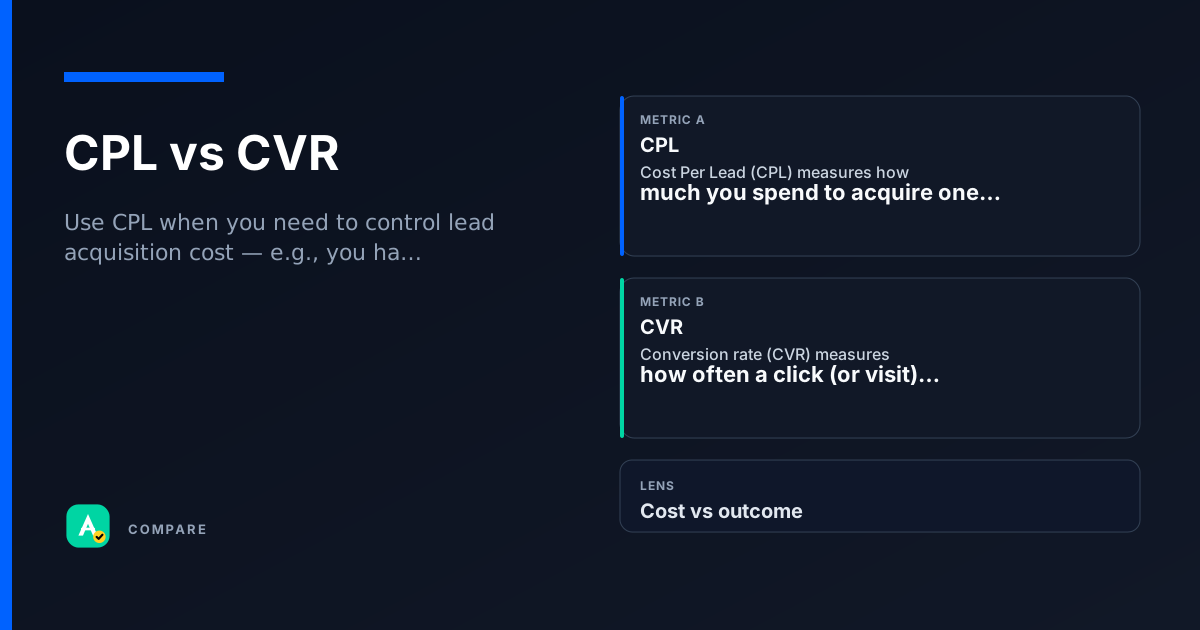
CPL (Cost Per Lead) tells you how much each lead costs. CVR (Conversion Rate) tells you what percentage of clicks or visitors actually convert. Together they answer: Am I paying too much for leads that don't convert?
Core difference: Cost vs. effectiveness
CPL measures cost efficiency of acquiring a lead. CVR measures conversion effectiveness of your landing page or funnel.
- CPL = Total ad spend / Total leads. Lower is better.
- CVR = Conversions / Total clicks (or visitors). Higher is better.
Why it matters
A low CPL is useless if CVR is also low — you're just buying cheap leads that never convert. A high CVR is wasted if CPL is too high — you're profitable but scaling is expensive.
Which to use when
Pick CPL when:
- You're running lead gen campaigns (form fills, sign-ups, demo requests).
- You want to compare efficiency across channels (e.g., LinkedIn vs. Google).
- You're optimizing for volume within a fixed budget.
Pick CVR when:
- You're evaluating landing page or creative performance.
- You're running retargeting or high-intent campaigns.
- You want to diagnose funnel drop-off (e.g., high CPL but low CVR = bad page).
Use both together when:
- You're building a CPA (Cost Per Acquisition) model: CPA = CPL / CVR.
- You're deciding whether to scale a campaign: low CPL + high CVR = green light.
How they diverge
What they measure
- CPL: Cost efficiency of acquiring a lead.
- CVR: Conversion effectiveness of a click or visit.
Optimization goal
- CPL: Lower is better (cheaper leads).
- CVR: Higher is better (more conversions per click).
Primary use case
- CPL: Budget allocation, channel comparison.
- CVR: Landing page / creative testing, funnel analysis.
Where they overlap
Both depend on conversion tracking
Without a properly installed conversion tag, neither metric can be calculated.
Both are post-click metrics
They measure what happens after a user clicks an ad, not before.
Both can be sliced by dimension
Campaign, ad set, creative, audience, device, time of day — both metrics support segmentation.
Real scenarios
Cheap leads that never convert
Setup: A B2B SaaS company runs LinkedIn lead gen ads. CPL is $15 (low), but CVR from lead to paid demo is 2% (low).
- What happened: The ad copy attracted low-intent users who filled the form but didn't book a demo.
- What they checked: CPL looked great, but CVR revealed the funnel was broken.
Takeaway: Don't celebrate low CPL without checking CVR. Fix the landing page or targeting first.
High CVR but high CPL
Setup: An e-commerce brand runs retargeting ads. CVR is 12% (high), but CPL is $8 (high).
- What happened: Retargeting audiences are small and expensive, but they convert well.
- What they checked: CVR confirmed the creative was effective, but CPL limited scale.
Takeaway: High CVR is good, but if CPL is too high for your target CPA, you need to find cheaper audiences or reduce bid.
How they work together
Use CPL when you need to control lead acquisition cost — e.g., you have a fixed budget and need to maximize lead volume.
Use CVR when you're testing landing pages, creatives, or offers — e.g., you want to know which version converts best.
Use both when you're building a CPA model or deciding whether to scale a campaign. Low CPL + high CVR = scale. High CPL + low CVR = fix the funnel first.
Side-by-side snapshot
| Lens | CPL | CVR |
|---|---|---|
| Definition | Cost per lead (ad spend / leads) | Conversion rate (conversions / clicks) |
| Optimization direction | Lower is better | Higher is better |
| Primary use case | Budget allocation, channel comparison | Landing page / creative testing, funnel analysis |
| Dependency | Requires lead tracking | Requires conversion tracking |
| Common pitfall | Ignoring lead quality | Ignoring cost efficiency |
Common pitfalls
Optimizing CPL without checking CVR
Why it's wrong: You can drive CPL down by targeting broad, low-intent audiences — but those leads rarely convert.
- What to do instead: Set a minimum CVR threshold before optimizing for CPL. Use CPA as the north star metric.
Optimizing CVR without checking CPL
Why it's wrong: You can boost CVR by targeting only high-intent, small audiences — but CPL will skyrocket.
- What to do instead: Set a maximum CPL threshold. Use CPA as the north star metric.
Quick check
Test whether you can tell these metrics apart.
boolean
CPL measures how much each lead costs.
Select an answer to continue
For learning only. Not advice on bids or spend.
You may also like
Metrics
Cost Per Lead (CPL)
Cost Per Lead (CPL) measures how much you spend to acquire one lead — a person who has taken a…
CostMetrics
Conversion Rate (CVR)
Conversion rate (CVR) measures how often a click (or visit) leads to a desired action — a purch…
PerformanceRelationships
CPM vs Floor Price
RelationshipsRelationships
Bid Request vs Win Rate
Relationships