#relationships·Jul 17, 2026·6 min read
CTR vs. Frequency: Which Metric Matters More for Campaign Performance?
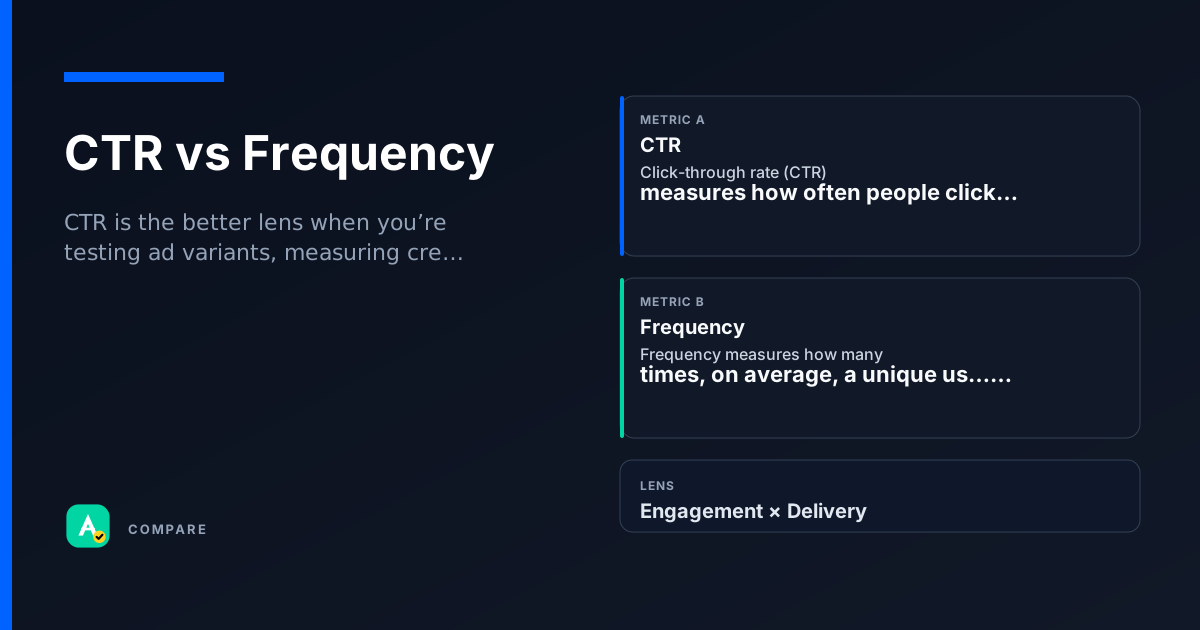
CTR (Click-Through Rate) measures how often people click your ad after seeing it. Frequency counts how many times the same person sees your ad. Together they reveal whether low clicks are due to poor creative or overexposure.
Core Difference: Engagement vs. Exposure
CTR = Clicks / Impressions × 100. It tells you the quality of your ad’s appeal.
Frequency = Total Impressions / Unique Reach. It tells you the quantity of exposure per person.
- CTR drops when creative fatigue sets in (same ad seen too often).
- Frequency rises when you target a small audience with high budget.
- A high CTR with high frequency may still annoy users (ad fatigue).
- A low CTR with low frequency may mean the ad simply isn’t relevant.
Which to Use When
Pick CTR when:
- You’re A/B testing ad copy or creative.
- You want to measure immediate user interest.
- You’re optimizing for engagement (e.g., video views, landing page visits).
Pick Frequency when:
- You’re worried about ad fatigue or brand annoyance.
- You’re running a brand awareness campaign with limited audience.
- You need to set frequency caps to control costs.
Use both when:
- You’re diagnosing a performance drop: low CTR + high frequency = fatigue; low CTR + low frequency = poor targeting/creative.
- You’re optimizing for efficient reach (high CTR at moderate frequency).
How they diverge
What They Measure
- CTR measures click engagement per impression.
- Frequency measures average exposure per unique user.
Impact of Audience Size
- CTR is relatively stable across audience size (if creative is good).
- Frequency rises sharply when audience is small relative to budget.
Optimization Goal
- CTR is optimized by improving creative, targeting, and relevance.
- Frequency is optimized by capping exposures and expanding reach.
Where they overlap
Both Use Impressions
Both metrics are calculated from impression data and unique user counts.
Both Signal Fatigue
When frequency climbs and CTR drops, both point to ad fatigue.
Both Are Pre-Conversion
Neither directly measures conversions or ROI — they are intermediate indicators.
Real scenarios
The Overexposed Audience
A retailer runs a retargeting campaign for cart abandoners with a small audience.
- What happened: CTR dropped from 2.5% to 0.8% after week 2.
- What they checked: Frequency had climbed to 8.5 per user.
Takeaway: High frequency caused ad fatigue. They capped frequency at 3 and refreshed creative — CTR returned to 2.1%.
The Low-CTR New Campaign
A SaaS company launches a display campaign to a broad lookalike audience.
- What happened: CTR was 0.05% after 10K impressions.
- What they checked: Frequency was 1.2 — very low. The issue wasn’t fatigue.
Takeaway: Low frequency ruled out overexposure. They improved ad copy and targeting — CTR rose to 0.3%.
How they work together
CTR is the better lens when you’re testing ad variants, measuring creative appeal, or optimizing for clicks and engagement.
Frequency is the better lens when you’re managing campaign reach, setting frequency caps, or diagnosing ad fatigue.
Use both together when you need to understand why performance changed — e.g., low CTR + high frequency = overexposure; low CTR + low frequency = poor targeting.
Side-by-side snapshot
| Lens | CTR | Frequency |
|---|---|---|
| Formula | Clicks / Impressions × 100 | Total Impressions / Unique Reach |
| What It Tells You | How engaging your ad is | How often people see your ad |
| Optimization Lever | Creative, copy, targeting | Frequency caps, audience expansion |
| Typical Range | 0.05% – 2% (display) / 1% – 5% (search) | 1 – 5 (brand) / 3 – 10 (retargeting) |
| Ad Fatigue Signal | Declining CTR over time | Rising frequency with flat/dropping CTR |
Common pitfalls
Confusing Low CTR with High Frequency
It’s tempting to blame low CTR on high frequency, but the two are independent.
- What to do instead: Always check frequency first. If frequency is low (<2), the problem is creative or targeting, not fatigue.
Optimizing Frequency Without Considering CTR
Setting a low frequency cap may reduce annoyance but also limit conversions if the ad needs multiple exposures to drive action.
- What to do instead: Use CTR trends to find the frequency sweet spot — where CTR starts to drop, cap there.
Quick check
Test whether you can tell these metrics apart.
boolean
A high frequency always means your campaign is performing well.
Select an answer to continue
For learning only. Not advice on bids or spend.
You may also like
Metrics
Click-through rate (CTR)
Click-through rate (CTR) measures how often people click your ad after seeing it.
EngagementMetrics
Frequency (Average Frequency)
Frequency measures how many times, on average, a unique user saw your ad during a campaign peri…
DeliveryRelationships
LTV vs ROI
RelationshipsRelationships
Floor Price vs Win Rate
Relationships