#relationships·Jul 17, 2026·6 min read
CPI vs CPA: Which Ad Metric Should You Optimize For?
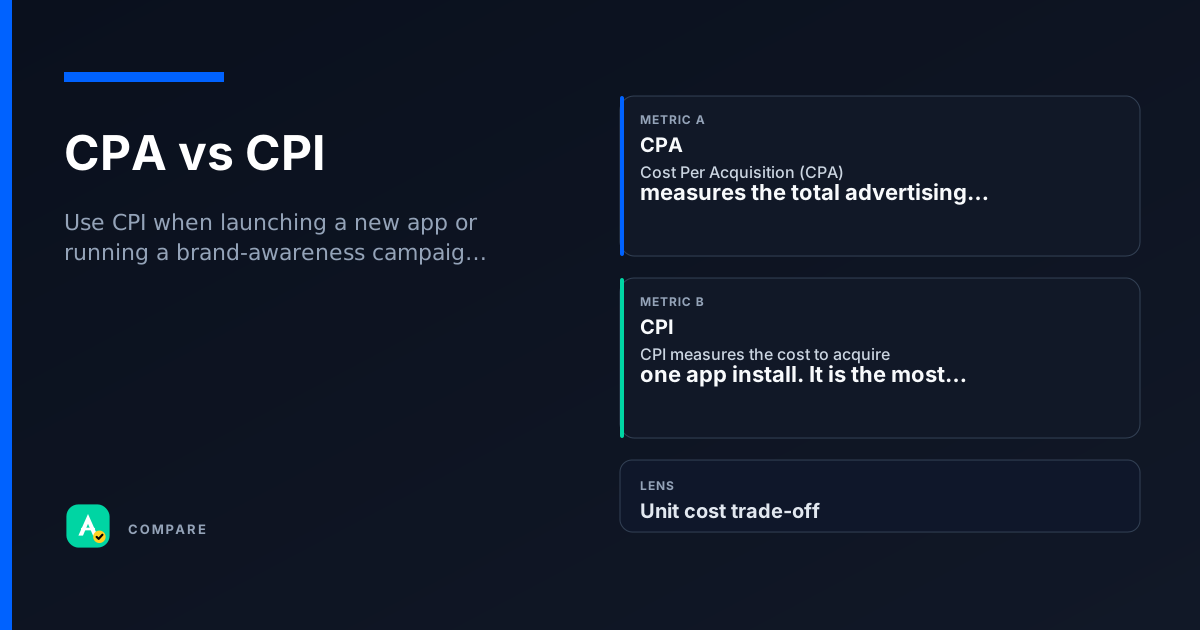
CPI (Cost Per Install) and CPA (Cost Per Action) are two common mobile advertising metrics. CPI measures the cost of getting a user to install your app, while CPA tracks the cost of a specific desired action, like a purchase or sign-up.
Core Difference: Install vs. Action
CPI focuses on the first step: getting the app on the user's phone. CPA goes deeper, tracking a valuable event after the install.
- CPI (Cost Per Install): You pay each time a user installs your app from an ad. Good for top-of-funnel volume.
- CPA (Cost Per Action): You pay only when a user completes a predefined action (e.g., in-app purchase, level completion, form fill). Tied to actual value.
Why it matters
- CPI is simpler to measure but can attract low-quality users who never engage.
- CPA aligns cost with business outcomes but is harder to optimize and often more expensive per event.
Which to use when
Choose based on your campaign goal and data maturity.
Pick CPI when:
- You need scale and brand awareness (new app launch).
- Your app has a free trial or is ad-supported (no immediate purchase).
- You want to test creative concepts quickly.
Pick CPA when:
- You need revenue or retention (e.g., subscription, in-app purchase).
- You have enough install data to optimize toward a downstream event.
- Your LTV (lifetime value) is predictable and you can set a target CPA.
Use both together:
- Run CPI campaigns for volume, then retarget users with CPA campaigns for conversion.
- Compare CPI vs. CPA to calculate install-to-action conversion rate.
How they diverge
Definition of success
CPI counts an install as success. CPA counts a specific action (purchase, registration, level-up).
- CPI: success = app installed.
- CPA: success = user completed action X.
Cost structure
CPI is usually cheaper per event because installs are easier to get. CPA is more expensive per action because it filters for engaged users.
- CPI: lower cost, higher volume.
- CPA: higher cost, higher quality.
Optimization difficulty
CPI is easier to optimize (just bid for installs). CPA requires more data and a clear conversion funnel.
- CPI: simple bid strategy.
- CPA: needs conversion tracking and enough events for machine learning.
Where they overlap
Both are performance-based
You only pay when the defined event occurs — no cost for impressions or clicks that don't convert.
Both rely on attribution
Both need a tracking link or SDK to attribute the event to a specific ad source or campaign.
Both can be gamed by fraud
Click injection, install bots, and fake events can inflate both CPI and CPA costs. Use fraud detection tools.
Real scenarios
Gaming app: CPI for volume, CPA for revenue
A casual game studio runs a CPI campaign to get 100k installs in a new market. Cost: $0.50/install. Later, they run a CPA campaign targeting users who make an in-app purchase. Cost: $5.00/purchase.
- What happened: CPI gave scale; CPA gave paying users.
- What they checked: Install-to-purchase conversion rate (5%).
Takeaway: CPI and CPA can work in sequence — CPI feeds the funnel, CPA filters for value.
E‑commerce app: CPA only
A shopping app with a high LTV ($50) runs only CPA campaigns for first purchases. They set a target CPA of $10.
- What happened: Lower install volume, but every install is a buyer.
- What they checked: Return on ad spend (ROAS) = 5x.
Takeaway: If your LTV is high and predictable, CPA can be more profitable than CPI.
How they work together
Use CPI when launching a new app or running a brand-awareness campaign. You want maximum installs at the lowest cost, and you'll optimize for engagement later.
Use CPA when you have a clear conversion event that drives revenue (e.g., subscription, purchase). You're willing to pay more per action for higher-quality users.
Use both when you have a two-stage funnel: CPI for top-of-funnel installs, then CPA for retargeting or re-engagement campaigns to drive conversions.
Side-by-side snapshot
| Lens | CPA | CPI |
|---|---|---|
| Definition | Cost per app install | Cost per predefined action (purchase, sign-up, etc.) |
| Typical cost | Lower ($0.10–$5.00) | Higher ($1.00–$50.00+) |
| User quality | Variable — many users may never engage | Higher — users who complete an action are more valuable |
| Optimization complexity | Low — bid for installs | High — needs conversion tracking and enough data |
| Best for | Top-of-funnel, brand awareness, scale | Bottom-of-funnel, revenue, retention |
Common pitfalls
Confusing CPI with CPA
Some marketers treat CPI as a proxy for CPA, but installs don't equal actions. A low CPI can hide a terrible conversion rate.
- What to do instead: Always measure the install-to-action rate. If CPI is $0.50 but only 1% convert, your effective CPA is $50.
Optimizing CPA without enough data
CPA campaigns need a minimum number of conversions per week (e.g., 10–15) for ad platforms to optimize. Starting CPA with zero data leads to high costs.
- What to do instead: Run CPI first to gather install data, then switch to CPA once you have ~100+ actions per week.
Quick check
Test whether you can tell these metrics apart.
single
Which metric tracks the cost of getting a user to install your app?
Select an answer to continue
For learning only. Not advice on bids or spend.