#relationships·Jul 17, 2026·6 min read
Fill Rate vs Viewability: Which Metric Tells You Your Ads Are Actually Seen?
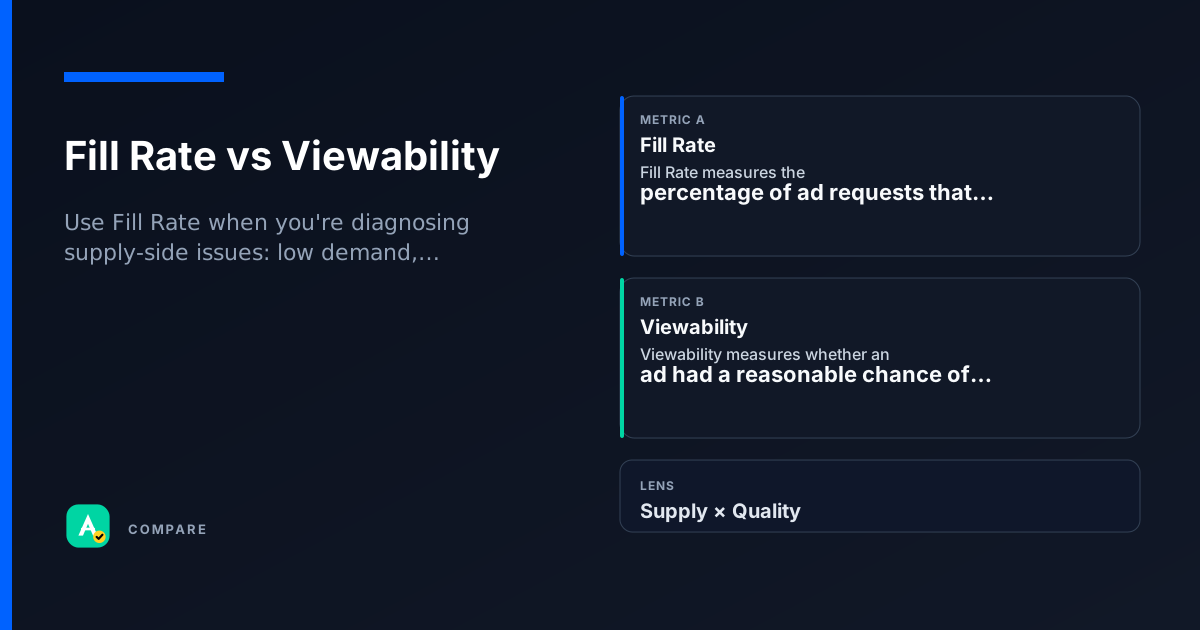
Fill Rate tells you how many ad requests got a response. Viewability tells you whether those responses were actually seen by a human. One measures supply availability, the other measures ad quality.
Fill Rate vs Viewability: The Core Difference
The decision question: Are my ads being served, and are they being seen?
Fill Rate = (filled impressions / total ad requests) × 100%. It measures supply-side efficiency — how often your inventory gets a buyer.
Viewability = (viewable impressions / total measured impressions) × 100%. It measures whether an ad had a chance to be seen (per MRC standard: ≥50% pixels for ≥1 second for display).
Key distinction
- Fill Rate is about quantity of sold inventory.
- Viewability is about quality of the delivered impression.
A high fill rate with low viewability means you're selling a lot of ads that users never see.
Which to Use When
Choose Fill Rate when:
- You're diagnosing ad server latency or demand partner performance.
- You want to know if your inventory is being monetized at all.
- You're optimizing price floors or ad refresh strategies.
Choose Viewability when:
- You're negotiating direct deals or programmatic guaranteed campaigns.
- You're evaluating ad placement (above the fold vs below the fold).
- You're reporting campaign effectiveness to advertisers.
Use both when:
- You're doing a holistic inventory audit: high fill + low viewability = sell less but better placements.
- You're setting quality floors in your ad server (e.g., only serve to placements with >70% viewability).
How they diverge
What They Measure
Fill Rate measures the percentage of ad requests that return a creative. Viewability measures the percentage of served impressions that meet the MRC viewability threshold.
- Fill Rate = filled / total requests
- Viewability = viewable / total measured impressions
Impact on Revenue
Fill Rate directly affects total revenue — more filled impressions = more money. Viewability affects CPM rates — higher viewability commands higher prices.
- Low fill rate: you're leaving money on the table.
- Low viewability: you're selling cheap inventory that advertisers may blacklist.
Optimization Levers
Fill Rate is improved by adding more demand partners, lowering price floors, or reducing ad refresh. Viewability is improved by moving ads above the fold, using sticky units, or reducing page clutter.
- Fill rate levers: demand, pricing, latency.
- Viewability levers: layout, device, ad unit size.
Where they overlap
Both Are Percentages
Both metrics are expressed as a percentage (0–100%). Both are commonly reported in ad server dashboards and programmatic platforms.
Both Affect Advertiser Trust
Low fill rate frustrates buyers who want scale. Low viewability frustrates buyers who want performance. Both can lead to reduced spend or blacklisting.
Real scenarios
High Fill Rate, Low Viewability — The Junk Inventory Trap
A publisher runs a sticky footer ad that loads on every page. Fill rate is 98% — great. But viewability is 35% because users scroll past it quickly.
- What happened: The ad server filled almost every request, but few ads were actually seen.
- What they checked: Fill rate looked healthy; viewability revealed the problem.
Takeaway: Don't optimize fill rate alone. Pair it with viewability to avoid selling invisible inventory.
Low Fill Rate, High Viewability — The Premium Gap
A publisher has a premium above-the-fold placement with 85% viewability. But fill rate is only 45% because price floors are too high.
- What happened: The placement is high quality but undersold.
- What they checked: Viewability was excellent; fill rate showed missed revenue.
Takeaway: Lower price floors or add more demand partners to monetize quality inventory.
How they work together
Use Fill Rate when you're diagnosing supply-side issues: low demand, high timeout rates, or poor ad server performance. It's your first check for monetization health.
Use Viewability when you're optimizing ad placements, negotiating premium deals, or reporting campaign quality to advertisers. It's your quality signal.
Use both when doing a full inventory audit. A placement with 95% fill rate but 40% viewability is selling junk — you need to redesign the layout, not add more demand.
Side-by-side snapshot
| Lens | Fill Rate | Viewability |
|---|---|---|
| Definition | Percentage of ad requests that return a creative | Percentage of served impressions that are in-view per MRC standard |
| Formula | Filled impressions / total ad requests × 100 | Viewable impressions / total measured impressions × 100 |
| Primary Use | Supply-side monetization efficiency | Ad placement quality and campaign effectiveness |
| Optimization | Add demand, lower floors, reduce latency | Move ads above fold, use sticky units, reduce clutter |
| Impact on Revenue | Direct — more filled = more revenue | Indirect — higher viewability = higher CPMs |
Common pitfalls
Treating Fill Rate as a Quality Metric
Some teams assume high fill rate means high quality. That's wrong.
- Fill rate only measures if an ad was served, not if it was seen.
- A high fill rate can hide low viewability, leading to advertiser churn.
What to do instead: Always pair fill rate with viewability in your reporting dashboard.
Ignoring Measurement Differences
Viewability is measured only on a subset of impressions (those with active measurement tags). Fill rate is measured on all requests.
- Comparing raw fill rate to viewability can be misleading if the viewability sample is small or biased.
What to do instead: Ensure viewability measurement covers a representative sample of your inventory.
Quick check
Test whether you can tell these metrics apart.
single
Which metric measures the percentage of ad requests that actually received a creative?
Select an answer to continue
For learning only. Not advice on bids or spend.
You may also like
Metrics
Fill Rate
Fill Rate measures the percentage of ad requests that result in a served ad.
SupplyMetrics
Viewability (Visible Impression Rate)
Viewability measures whether an ad had a reasonable chance of being seen by a human.
QualityRelationships
Second-Price Auction vs Win Rate
RelationshipsRelationships
CTR vs CVR
Relationships