#relationships·Jul 17, 2026·6 min read
CTR vs CVR: Which Ad Metric Should You Prioritize?
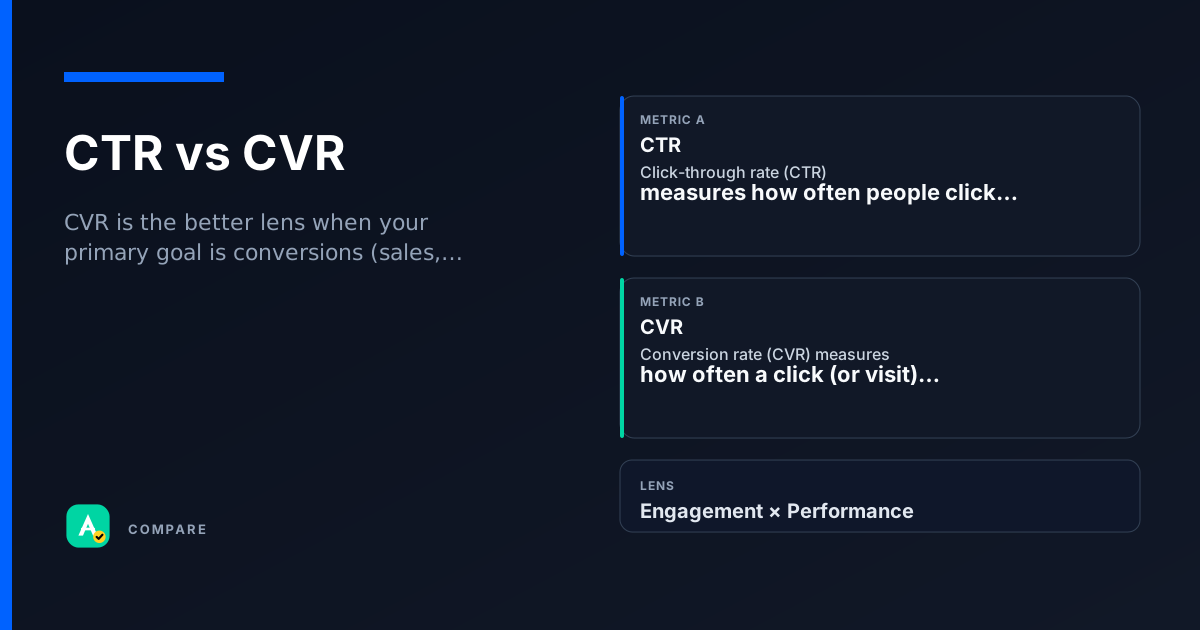
CTR (Click-Through Rate) measures how often people click your ad. CVR (Conversion Rate) measures how often those clicks lead to a desired action. Both are vital, but they answer different questions about your campaign's performance.
Core Difference: Engagement vs. Action
CTR tracks the percentage of people who see your ad and click it. It's a measure of ad relevance and creative appeal.
CVR tracks the percentage of clicks that result in a conversion (purchase, sign-up, etc.). It's a measure of landing page effectiveness and offer quality.
- CTR = Clicks / Impressions × 100
- CVR = Conversions / Clicks × 100
Why It Matters
A high CTR with low CVR means your ad is compelling but your landing page is failing. A low CTR with high CVR means your targeting is off, but your page converts well.
Which to Use When
Pick CTR when:
- You're testing ad copy, images, or headlines.
- Your goal is brand awareness or traffic generation.
- You want to gauge audience interest in a new offer.
Pick CVR when:
- You're optimizing landing pages or checkout flows.
- Your goal is sales, sign-ups, or lead generation.
- You need to measure ROI and cost per acquisition.
Use both when:
- You're diagnosing a funnel bottleneck.
- You're running a full-funnel campaign (awareness → conversion).
How they diverge
What They Measure
CTR measures click-through behavior. CVR measures post-click conversion behavior.
- CTR = ad engagement
- CVR = landing page success
Optimization Focus
CTR is optimized via ad creative, copy, and targeting. CVR is optimized via landing page design, offer, and checkout flow.
- CTR → improve the ad
- CVR → improve the page
Typical Benchmarks
CTR varies by channel (e.g., 0.5%–2% for display, 2%–5% for search). CVR varies by industry (e.g., 1%–5% for e-commerce, 5%–15% for B2B lead gen).
- CTR is usually higher than CVR
- CVR is more sensitive to user intent
Where they overlap
Both Are Funnel Metrics
Both CTR and CVR are rate-based metrics that track user progression through the marketing funnel. They help identify where users drop off.
Both Require Context
Neither metric is meaningful in isolation. Both should be compared against historical data, industry averages, and campaign goals.
Real scenarios
High CTR, Low CVR
An e-commerce ad gets a 4% CTR but only a 0.5% CVR.
- What happened: The ad was compelling, but the landing page was slow and confusing.
- What they checked: Page load time, mobile responsiveness, and call-to-action clarity.
Takeaway: Optimize the landing page to match the ad's promise.
Low CTR, High CVR
A B2B ad gets a 0.3% CTR but a 12% CVR.
- What happened: The ad didn't attract many clicks, but those who clicked were highly qualified.
- What they checked: Ad targeting, keyword match types, and audience overlap.
Takeaway: Improve ad relevance and expand reach to similar audiences.
How they work together
CVR is the better lens when your primary goal is conversions (sales, sign-ups, leads). Use it to evaluate landing page performance and ROI.
CTR is the better lens when your primary goal is engagement (traffic, brand awareness, interest). Use it to test ad creative and targeting.
Use both when you need a full-funnel view. A high CTR + low CVR suggests a landing page problem. A low CTR + high CVR suggests an ad problem.
Side-by-side snapshot
| Lens | CTR | CVR |
|---|---|---|
| Definition | CVR = Conversions / Clicks × 100 | CTR = Clicks / Impressions × 100 |
| What It Measures | Post-click conversion success | Ad engagement and relevance |
| Optimization Focus | Landing page, offer, checkout | Ad creative, copy, targeting |
| Typical Range | 1%–15% (varies by industry) | 0.5%–5% (varies by channel) |
| Primary Use Case | Sales, lead gen, ROI analysis | Traffic, brand awareness, A/B testing |
Common pitfalls
Confusing CTR with CVR
Some marketers assume a high CTR automatically means high conversions. That's wrong.
- What to do instead: Always analyze CTR and CVR together. A high CTR with low CVR indicates a leaky funnel.
Optimizing for CTR Alone
Chasing high CTR can lead to clickbait ads that attract the wrong audience, hurting CVR.
- What to do instead: Balance CTR with conversion-focused metrics like CVR and CPA.
Quick check
Test whether you can tell these metrics apart.
single
Which metric measures the percentage of clicks that result in a conversion?
Select an answer to continue
For learning only. Not advice on bids or spend.
You may also like
Metrics
Click-through rate (CTR)
Click-through rate (CTR) measures how often people click your ad after seeing it.
EngagementMetrics
Conversion Rate (CVR)
Conversion rate (CVR) measures how often a click (or visit) leads to a desired action — a purch…
PerformanceRelationships
CTR vs Impression
RelationshipsRelationships
Bid Request vs Match Rate
Relationships