#relationships·Jul 17, 2026·6 min read
Engagement Rate vs. Viewability: Which Metric Tells You If Your Ad Actually Worked?
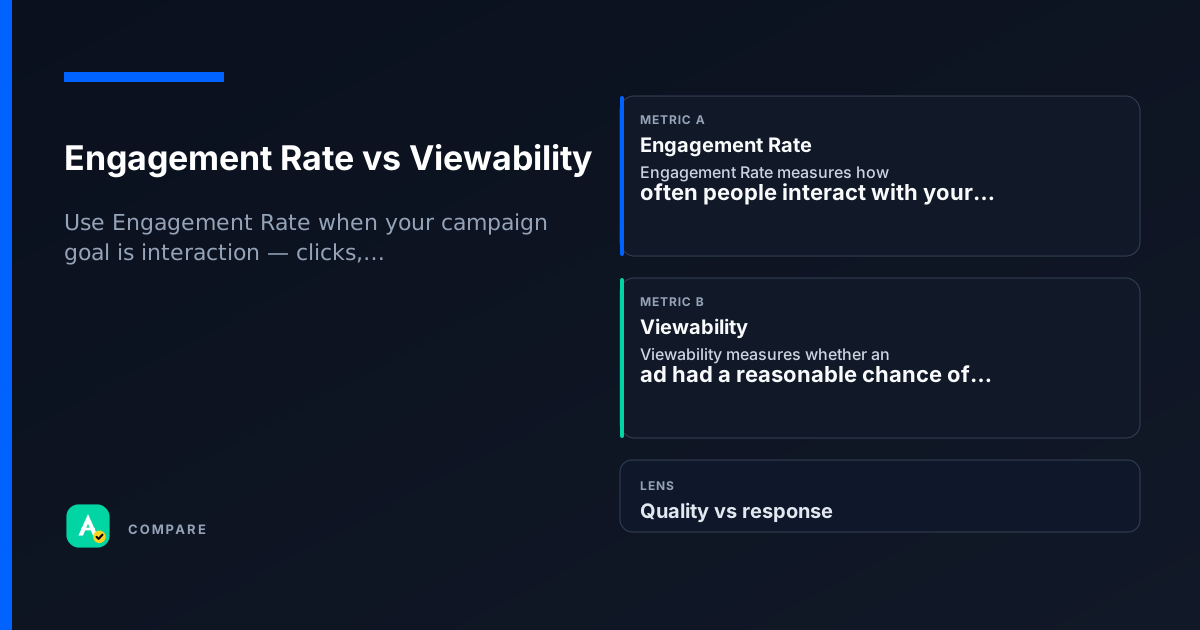
Should you optimize for Engagement Rate or Viewability? Both measure ad effectiveness, but from opposite ends: one tracks user action, the other tracks whether the ad had a chance to be seen. Knowing the difference prevents you from chasing high viewability with low engagement.
Core Difference: Action vs. Opportunity
Engagement Rate measures how many people interacted with your ad (clicks, swipes, video plays) divided by total impressions. It answers: Did users do something?
Viewability measures the percentage of impressions that were actually visible on screen (per IAB standard: ≥50% of pixels for ≥1 second). It answers: Could users have seen it?
Key contrast
- Engagement Rate = active response / total impressions
- Viewability = visible impressions / total measured impressions
One is about action, the other about opportunity. A highly viewable ad can still get zero engagement if the creative is weak.
Which to Use When
Pick Engagement Rate when:
- Your goal is direct response (clicks, sign-ups, video completions)
- You want to test creative effectiveness
- You're optimizing for user intent signals
Pick Viewability when:
- Your goal is brand awareness (impressions that can be seen)
- You're auditing inventory quality (avoiding below-the-fold placements)
- You need a baseline before measuring attention or lift
Use both together when:
- You want to diagnose why a campaign underperformed: low viewability = placement issue; high viewability + low engagement = creative or targeting issue.
How they diverge
What They Measure
Engagement Rate = user-initiated action (clicks, swipes, expands). Viewability = technical visibility (pixels on screen, time in view).
- Engagement is behavioral; Viewability is environmental.
Optimization Levers
Engagement Rate is improved by creative, copy, and targeting. Viewability is improved by ad placement, page layout, and viewability thresholds.
- You can't fix a low engagement rate by moving the ad higher on the page.
Reporting & Benchmarks
Engagement Rate varies wildly by format (video vs. display) and industry. Viewability has a clear IAB standard (≥50% pixels, ≥1 sec for display; ≥50% pixels, ≥2 sec for video).
- Viewability is more standardized; engagement rate is more context-dependent.
Where they overlap
Both Use Impressions as Denominator
Engagement Rate = engagements / impressions. Viewability = viewable impressions / measured impressions. Both are ratios that depend on impression counting.
Both Are Intermediate Metrics
Neither directly measures conversions, sales, or brand lift. They are leading indicators that help diagnose campaign health before final outcomes.
Real scenarios
High Viewability, Low Engagement
A display campaign for a finance app achieved 78% viewability but only 0.05% CTR.
- What happened: Ads were highly visible but the creative didn't resonate.
- What they checked: Viewability was fine; engagement rate revealed a creative problem.
Takeaway: Viewability alone can mask poor creative performance.
Low Viewability, High Engagement
A video campaign on a news site had 35% viewability but a 12% completion rate on visible starts.
- What happened: Many impressions were below the fold, but the few that were seen performed well.
- What they checked: Engagement rate looked good, but viewability showed massive wasted spend.
Takeaway: High engagement can hide inventory waste — always check viewability.
How they work together
Use Engagement Rate when your campaign goal is interaction — clicks, video views, or social actions. It's the better lens for direct-response and creative testing.
Use Viewability when you need to ensure your ads are actually seen — brand awareness campaigns, premium inventory audits, or compliance with viewability guarantees.
Use both when diagnosing performance: low viewability? Fix placement. High viewability but low engagement? Fix creative or targeting. Together they give a fuller picture.
Side-by-side snapshot
| Lens | Engagement Rate | Viewability |
|---|---|---|
| Definition | Interactions / Impressions | Viewable Impressions / Measured Impressions |
| What It Tells You | Did users act? | Could users see it? |
| Primary Use Case | Direct response, creative testing | Brand awareness, inventory quality |
| Improvement Levers | Creative, copy, targeting | Ad placement, page layout, viewability thresholds |
| Standardization | No universal benchmark (varies by format/industry) | IAB standard: ≥50% pixels, ≥1 sec (display), ≥2 sec (video) |
Common pitfalls
Optimizing Engagement Rate Without Viewability Filter
Why it's wrong: You might be optimizing for clicks from ads that were barely seen (e.g., accidental clicks).
- What to do instead: Apply a viewability floor (e.g., only count engagements from viewable impressions) to get meaningful engagement rate.
Treating Viewability as a Success Metric
Why it's wrong: High viewability doesn't mean users paid attention or took action. It only means the ad could be seen.
- What to do instead: Use viewability as a quality gate, not a KPI. Pair it with attention or engagement metrics.
Quick check
Test whether you can tell these metrics apart.
boolean
Engagement Rate measures whether an ad was visible on screen.
Select an answer to continue
For learning only. Not advice on bids or spend.
You may also like
Metrics
Engagement Rate (ER)
Engagement Rate measures how often people interact with your ad after seeing it.
EngagementMetrics
Viewability (Visible Impression Rate)
Viewability measures whether an ad had a reasonable chance of being seen by a human.
QualityRelationships
First-Price Auction vs Floor Price
RelationshipsRelationships
AOV vs CPA
Relationships