#relationships·Jul 17, 2026·6 min read
CPM vs Reach: Which Metric Tells You If Your Ad Budget Is Wasted?
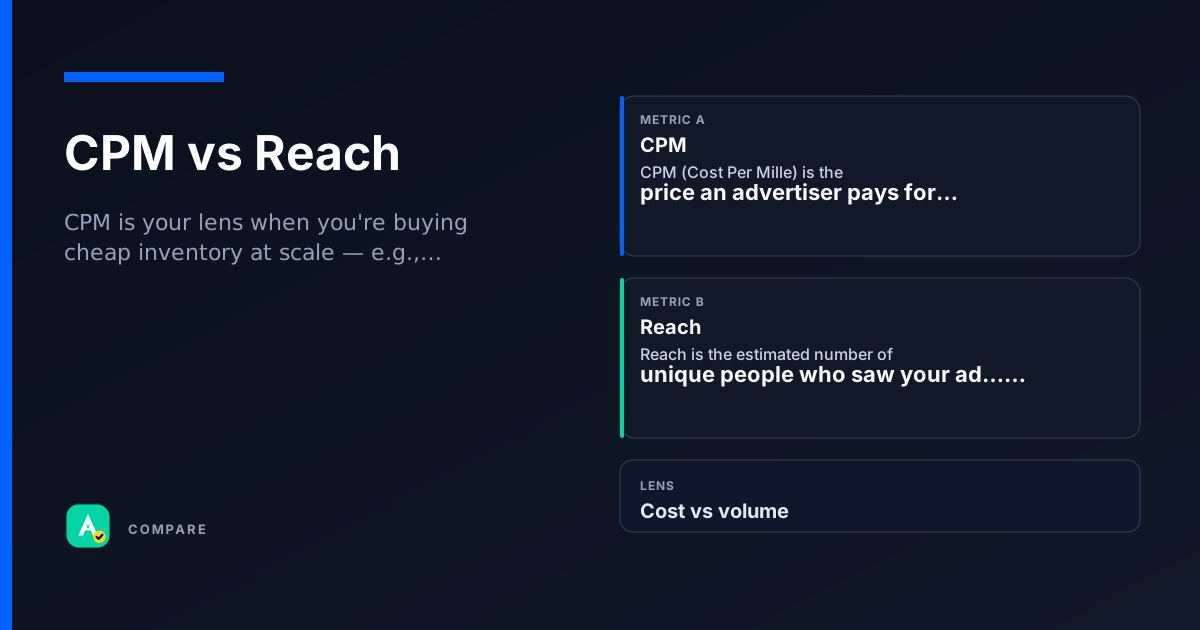
CPM (cost per thousand impressions) tells you how efficiently you buy eyeballs. Reach tells you how many unique eyeballs you actually got. The decision question: Am I paying a fair price for attention, or am I just seeing the same few people over and over?
Core Difference: Cost Efficiency vs. Unique Audience Size
CPM = Cost ÷ (Impressions / 1000). It measures the cost to serve 1,000 ad impressions, regardless of who sees them. A low CPM can mean cheap inventory — or it can mean you're buying the same user 500 times.
Reach = number of unique users exposed to your ad in a given period. It strips out frequency. High reach with low CPM is ideal; high CPM with low reach means you're overpaying for a small, loyal audience.
Key difference at a glance
- CPM cares about volume of impressions.
- Reach cares about uniqueness of people.
- Frequency = Impressions / Reach — the hidden link between them.
Which to Use When
Choose CPM when
- You're optimizing for cost efficiency of broad awareness.
- You're buying programmatic display or video at scale.
- You want to benchmark inventory costs across publishers.
Choose Reach when
- You're running a brand awareness campaign and need to maximize unique exposure.
- You're worried about ad fatigue (same user seeing the ad too many times).
- You're comparing the incremental value of a new channel vs. an existing one.
Use both together when
- You calculate CPM per unique reach (cost to reach 1,000 unique people). This filters out the waste of high-frequency delivery.
- You're setting frequency caps — CPM tells you the cost, reach tells you if the cap is working.
How they diverge
What They Measure
- CPM: Cost per 1,000 ad impressions (total served).
- Reach: Number of unique users exposed.
Sensitivity to Frequency
- CPM: Ignores frequency — 1,000 impressions to 1 user costs the same as 1,000 impressions to 1,000 users.
- Reach: Drops when frequency is high — you see the same people, not new ones.
Optimization Levers
- CPM: Lower by targeting cheaper inventory, using broader audiences, or reducing ad quality.
- Reach: Increase by expanding audience targeting, adding new placements, or reducing frequency caps.
Where they overlap
Both Are Awareness Metrics
Neither measures clicks, conversions, or ROI. They tell you if your ad was delivered, not if it worked.
Both Can Be Gamed by Fraud
Bot traffic inflates impressions (lowering CPM artificially) and can also inflate reach if bots rotate IPs/device IDs.
Both Are Used in Campaign Planning
Advertisers set CPM targets and reach goals before launch. Both are reported in standard dashboards (Google Ads, Meta, etc.).
Real scenarios
The Cheap CPM That Wasted Budget
A DTC brand ran a YouTube campaign with a $5 CPM — half the industry average. Reach was only 20,000 after 500,000 impressions.
- What happened: Frequency was 25. The same 20,000 users saw the ad 25 times each. The low CPM came from a narrow retargeting list.
- What they checked: They looked at CPM alone and missed frequency. When they added reach + frequency analysis, they saw the waste.
Takeaway: Low CPM is meaningless if reach is tiny. Always pair CPM with reach and frequency.
High Reach, High CPM — Worth It?
A B2B SaaS company ran LinkedIn ads at a $45 CPM but reached 80% of their target account list in 2 weeks.
- What happened: The high CPM was justified because the reach was concentrated on high-value decision-makers.
- What they checked: They compared CPM per unique reach vs. other channels. LinkedIn was more expensive per impression but cheaper per qualified reach.
Takeaway: High CPM can be efficient if reach is targeted and valuable. Don't optimize CPM in a vacuum.
How they work together
CPM is your lens when you're buying cheap inventory at scale — e.g., programmatic display for a mass-market product. You want the lowest cost per thousand impressions, even if some users see the ad 10 times.
Reach is your lens when you're launching a new brand or product and need to maximize the number of unique people who hear about it. Frequency caps are your friend here.
Both when you're doing frequency-aware planning. Calculate CPM per unique reach = (Cost / (Reach / 1000)). This tells you the true cost to reach 1,000 different people — the metric that matters for brand awareness.
Side-by-side snapshot
| Lens | CPM | Reach |
|---|---|---|
| Definition | Cost per 1,000 ad impressions | Number of unique users exposed |
| Formula | Cost / (Impressions / 1000) | Unique users (counted by device ID, cookie, or login) |
| Sensitive to frequency? | No — 1,000 impressions to 1 user = same as to 1,000 users | Yes — high frequency reduces reach growth |
| Best for | Cost efficiency benchmarking, scale buying | Brand awareness, audience size goals |
| Common platform | Google Ads, DV360, Meta Ads Manager | Meta Ads Manager (unique reach), Google Ads (unique reach with Brand Lift) |
Common pitfalls
Optimizing CPM Without Reach = Frequency Blindness
Why it's wrong: A low CPM can hide extreme frequency (same users seeing the ad dozens of times). You think you're getting a deal, but you're just annoying your audience.
- What to do instead: Always report CPM + Reach + Frequency together. Set a max frequency cap before launch.
Chasing Reach Without Cost Control
Why it's wrong: Maximizing reach by opening up all placements and audiences can skyrocket CPM. You get unique users, but at an unsustainable cost.
- What to do instead: Set a target CPM per unique reach and optimize toward that blended metric.
For learning only. Not advice on bids or spend.
You may also like
Metrics
Cost Per Mille (CPM)
CPM (Cost Per Mille) is the price an advertiser pays for 1,000 ad impressions.
CostMetrics
Reach (Unique Reach)
Reach is the estimated number of unique people who saw your ad at least once during a reporting…
DeliveryRelationships
First-Price Auction vs Win Rate
RelationshipsRelationships
Bid Request vs Auction Latency
Relationships