#relationships·Jul 17, 2026·6 min read
CPC vs CPI: Which Cost Metric Tells You More About Campaign Performance?
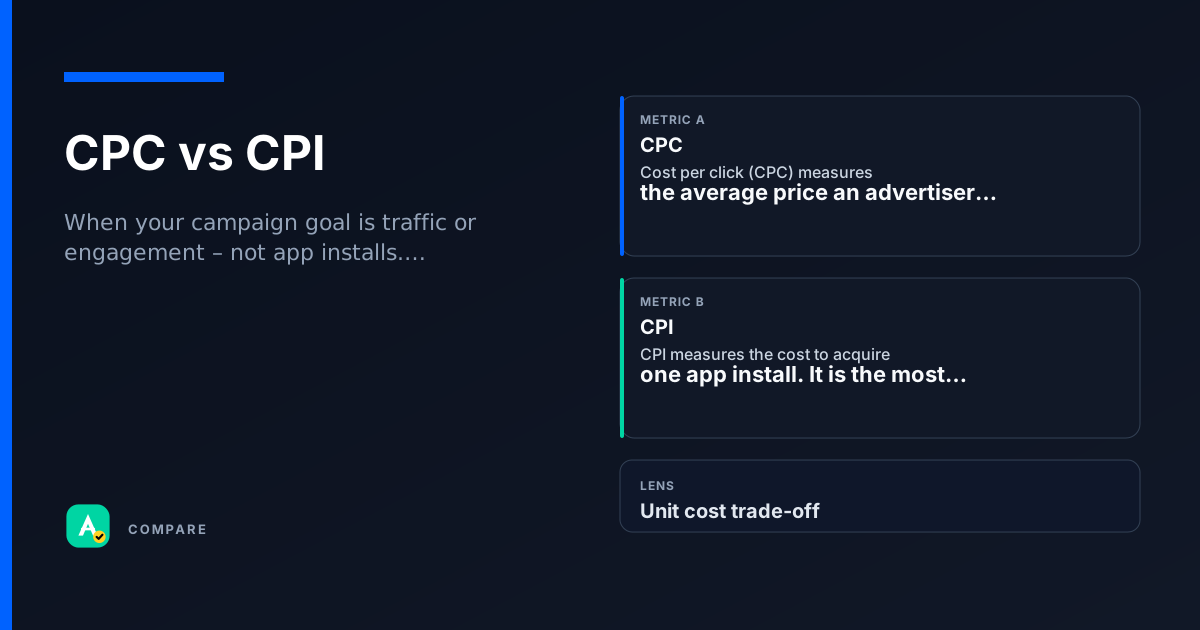
CPC (Cost Per Click) and CPI (Cost Per Install) answer different questions: How much did each click cost? vs. How much did each app install cost? One tracks engagement, the other tracks conversion.
Core Difference: Click Cost vs. Install Cost
CPC = total ad spend / total clicks. It measures the cost to drive a user to your landing page.
CPI = total ad spend / total installs. It measures the cost to acquire a user who actually installs your app.
- CPC is a top-of-funnel metric – it shows how efficiently you generate interest.
- CPI is a bottom-of-funnel metric – it shows how efficiently you convert that interest into a high-value action.
Why this matters
A low CPC can still lead to a high CPI if your click-to-install rate is poor. Optimizing for CPC alone may waste budget on clicks that never convert.
Which to Use When
Pick CPC when:
- Your goal is traffic or brand awareness.
- You want to optimize for low-cost visits to a landing page.
- You are running a non-app campaign (e.g., lead gen, content promotion).
Pick CPI when:
- Your goal is app installs.
- You care about cost per acquisition (CPA) for your app.
- You need to compare the efficiency of different install campaigns.
Use both together when:
- You want to diagnose funnel efficiency. A low CPC + high CPI = weak click-to-install conversion. A high CPC + low CPI = strong conversion but expensive clicks.
Pitfall: Don't optimize for CPI alone if your install volume is tiny – a few installs can make CPI look artificially good or bad.
How they diverge
Action Measured
- CPC: Cost per click (user taps ad).
- CPI: Cost per install (user downloads and opens app).
Funnel Position
- CPC: Top of funnel – measures interest.
- CPI: Bottom of funnel – measures conversion.
Typical Use Case
- CPC: Non-app campaigns (web, lead gen).
- CPI: App install campaigns only.
Where they overlap
Both Are Cost Metrics
Both are calculated as spend / number of actions (clicks or installs). Both help you compare campaign efficiency.
Both Are Used in Mobile Ads
Platforms like Google Ads, Meta, and Apple Search Ads report both CPC and CPI for app campaigns.
Both Can Be Optimized
You can set bid strategies for both (e.g., target CPC, target CPI) depending on your campaign objective.
Real scenarios
Low CPC, High CPI – The Click Trap
Setup: A gaming app runs a Facebook campaign. CPC is $0.15 (low), but CPI is $8.50 (high).
- What happened: Cheap clicks attracted low-intent users who tapped but didn't install.
- What they checked: Click-to-install conversion rate was only 1.8%.
Takeaway: Low CPC doesn't guarantee low CPI. Optimize for installs, not just clicks.
High CPC, Low CPI – Quality Over Quantity
Setup: A finance app runs a Google Ads campaign. CPC is $1.20 (high), but CPI is $3.00 (low).
- What happened: Expensive clicks came from high-intent users who installed at a 40% rate.
- What they checked: Click-to-install conversion rate was 40%.
Takeaway: A high CPC can be acceptable if it leads to a low CPI. Focus on the full funnel.
How they work together
When your campaign goal is traffic or engagement – not app installs. CPC gives you a direct cost-per-visit signal.
When your campaign goal is app installs. CPI is the true cost-per-acquisition for your app.
When you need to diagnose funnel efficiency. Compare CPC and CPI to see if your clicks are converting into installs at a reasonable rate.
Side-by-side snapshot
| Lens | CPC | CPI |
|---|---|---|
| Full Name | Cost Per Click | Cost Per Install |
| Formula | Spend / Clicks | Spend / Installs |
| Funnel Stage | Top (interest) | Bottom (conversion) |
| Typical Campaign Type | Traffic, awareness | App installs |
| Platform Support | All ad platforms | App-only platforms (Google, Meta, Apple Search Ads) |
Common pitfalls
Confusing CPC with CPI
Why the confusion is wrong: CPC and CPI measure different actions. Using CPC to judge install campaign efficiency ignores the conversion step.
- What to do instead: Always track both. If you only look at CPC, you might think cheap clicks are good – but they could be worthless if no one installs.
Optimizing CPI with Tiny Install Volumes
Why the confusion is wrong: A few installs can make CPI look artificially low (or high). A campaign with 2 installs and $10 spend has a CPI of $5 – but that's not reliable.
- What to do instead: Wait for at least 50-100 installs before making CPI-based decisions. Use statistical significance.
For learning only. Not advice on bids or spend.